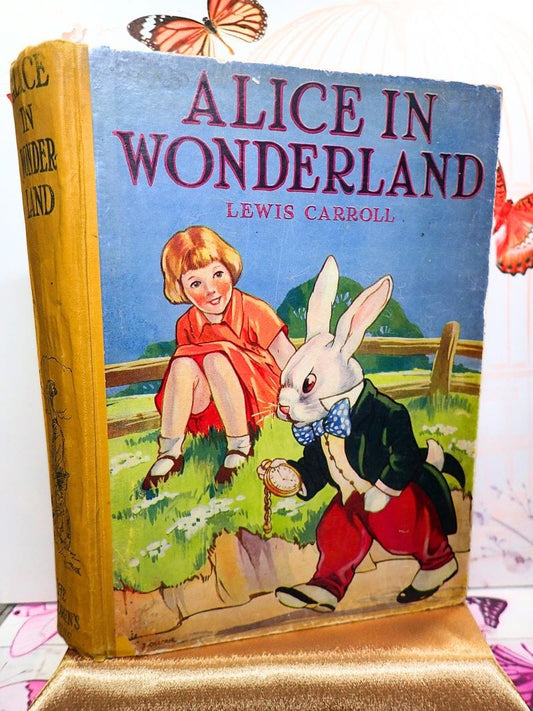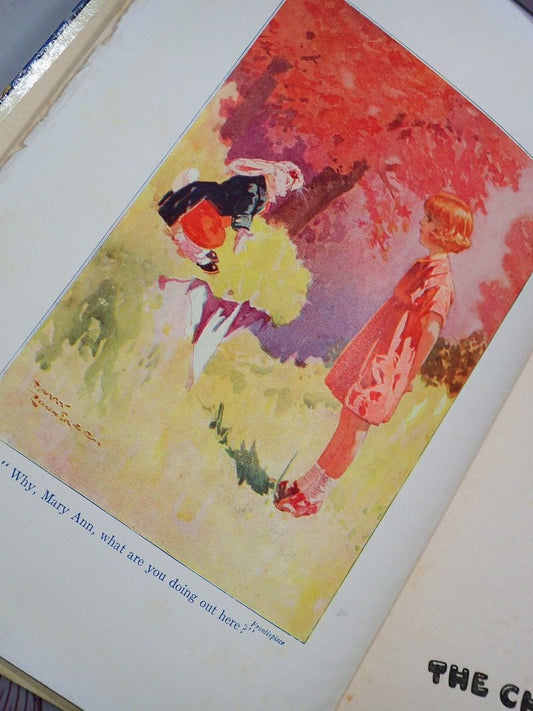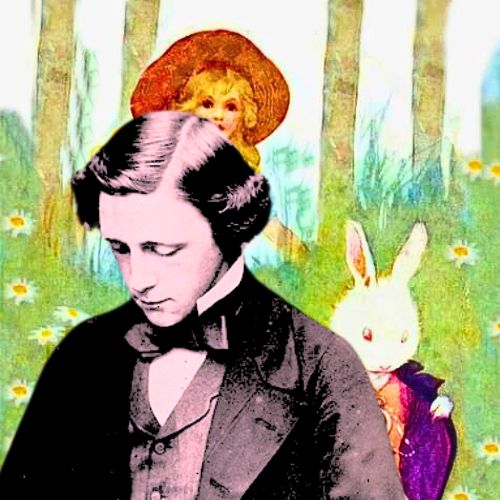
Vintage Lewis Carroll & Rare Alice in Wonderland Editions

Lewis Carroll

Author

Collector's Guide

A Journey Into the Curious Mind of Lewis Carroll

On a "Golden Afternoon" in July 1862, a shy, stuttering mathematical lecturer named Charles Lutwidge Dodgson took a rowing trip that would change children’s literature forever. To amuse his young friend, Alice Liddell, he amused her with a tale of a rabbit hole and a fantastical world that turned Victorian logic on its head. While the world came to know him by the pseudonym "Lewis Carroll," Dodgson remained a man of deep eccentricities—a brilliant pioneer of photography, a dedicated deacon, and a mathematician who begged his father to explain logarithms as a child. Our Collector's Archive celebrates this "precociously intelligent" mind, exploring the journey from his hand-drawn manuscripts to the iconic Tenniel editions that continue to enchant the world today.
🪶 In their own words
Christ Church, Oxford March 1, 1885

"My Dear Mrs Hargreaves, I fancy this will come to you almost like a voice from the dead, after so many years of silence --and yet those years have made no difference, that I can perceive in my mind clearness of memory of the days when we did correspond..."

Letter to Alice Hargreaves (née Liddell) from Charles Dodgson, saved by Alice for the rest of her life.
— Lewis Carroll
Kittys Tales Icon

Curated for you

Lewis Carroll Featured

Research & Curation Notes

LEWIS CARROLL(Charles Lutwidge Dodgson): His Life

Born in Cheshire in 1832, Charles Lutwidge Dodgson was a "precociously intelligent" child who begged his father to explain logarithms at an early age. Despite a lifelong stutter and a "slightly odd," shy demeanor, he possessed a fervent imagination, often amusing himself by creating diverse entertainments and befriending "strange animals" (Richardson, 1963).

His mathematical brilliance eventually led him to Oxford, where he matriculated with double honours before becoming a mathematical lecturer at Christ Church. As an Oxford Don, Dodgson lived a dedicated bachelor life, having been ordained as a Deacon in 1861 (Bakewell, 1996).

The publication of Alice’s Adventures in Wonderland under the pseudonym Lewis Carroll brought him immense fame—and occasionally, amusing notoriety. He famously delighted in the popular rumour that he had gone "quite mad," once surprising a mother and daughter on a train by sending them a copy of Alice after they had discussed his supposed insanity without realizing who he was (Bjork & Eriksson, 1993).

Dodgson’s private life remained eccentric, defined by a "bizarre sense of humour" and an intense, pioneering passion for the art of photography. While modern speculation often lingers on his numerous "child-friends," it is vital to view his work through the lens of Victorian social mores. At the time, photography was emerging as a new alternative to classical portraiture and painting, often following the same artistic traditions used by Victorian painters (Waggoner, 2020).

His most famous "child-friend," Alice Liddell, maintained a stoic silence regarding their friendship throughout her life. It was only after her passing that it was discovered she had cherished the final letter Dodgson ever wrote to her, despite her family having destroyed his earlier correspondence years prior (Cohen, 1996).

The Final Chapter
Charles Dodgson’s long and productive life came to a close on January 14, 1898. He passed away at his sisters' home, "The Chestnuts" in Guildford, from a severe bout of pneumonia following a case of influenza. He was 65 years old. He was laid to rest at the Mount Cemetery in Guildford, leaving behind a legacy that bridged the rigid world of Victorian mathematics with the eternal, lawless magic of Wonderland.

LEWIS CARROLL(Charles Lutwidge Dodgson): His Work

On July 4th, 1862, during a "Golden Afternoon" on the River Thames, Charles Lutwidge Dodgson spun a tale to amuse young Alice Liddell that would become the cornerstone of children's literature: Alice’s Adventures in Wonderland.

While Dodgson was a talented artist whose hand-drawn manuscript illustrations showed great imagination, the world-famous identity of the book was truly forged through his collaboration with the Punch cartoonist Sir John Tenniel. Tenniel’s grotesque yet disciplined wood-engravings provided the perfect visual anchor for Carroll's surreal logic.

Beyond the Alice books and his sequel Through the Looking-Glass, Dodgson was a prolific letter writer and a pioneer of photography as a burgeoning art form (Waggoner, 2020). He also maintained his "staid" identity as an Oxford lecturer, contributing significant scholarly works to the field of Mathematics (Langford, 1932).

The physical journey of the original manuscript, Alice’s Adventures Under Ground, is a story in itself. Faithfully gifted to Alice Liddell as promised (Winchester, 2011), she later sold it in 1928 to the American dealer Dr. Rosenbach for a record-breaking £15,400. After passing through the hands of American collectors, the manuscript finally returned home in 1948—donated to the British Library by a group of Americans in recognition of Britain's courage during the Second World War.
The original Manuscript is now safely held at the British Library in London.

Curator's Resource: You can view the digitized pages of the original "Alice’s Adventures Under Ground" manuscript at the British Library’s Lewis Carroll Collection.

From the Researcher's Desk

Annotated Bibliography: Lewis Carroll

Bakewell, M. (1996) Lewis Carroll: A biography. London: Heinemann.

Note: A vital record of Dodgson’s bachelor life as an Oxford Don, exploring the social necessity of his remaining unmarried and his eventual ordination as a Deacon.

Bjork, C. and Eriksson, I. (1993) The other Alice. Stockholm: Raben & Sjogren.

Note: Provides a detailed account of the "Other Alice" and the global journey of the original manuscript, including the record-breaking sale to Dr. Rosenbach.

Cohen, M. N. (1995) Lewis Carroll: A biography. New York: Alfred A. Knopf. (Reprinted 1996 by Vintage Books).

Note: A comprehensive examination of the enigmatic author’s life. This work meticulously traces his dual identity as a shy Oxford don and pioneering photographer, while exploring the survival of his extensive artwork and correspondence.

Cohen, M. N. (ed.) (1979) The letters of Lewis Carroll. London: Macmillan.

Note: A primary source documenting the "last letter" Alice Liddell cherished and the family's subsequent destruction of the early correspondence.

Reed, L. (1932) The Life of Lewis Carroll. London: W. & G. Foyle.

Note: Published for the centenary of Dodgson’s birth, this biography is notable for introducing interesting correspondence with the actress Ellen Terry and anecdotes by Isa Bowman. Most remarkably, a famous first-edition copy exists inscribed by Reed to the "eternally young" Alice Liddell herself.

Richardson, J. (1963) The young Lewis Carroll. London: Max Parrish.

Note: Focuses on Dodgson’s "fervent imagination" as a child, where he amused himself with strange pets and created diverse, self-fashioned amusements.

Waggoner, D. (2020) Lewis Carroll's photography and modern childhood. Princeton: Princeton University Press.

Note: An essential modern look at his "eccentrically intense" love of photography, framing his work within Victorian artistic mores and the transition from painting to portraiture.

Winchester, S. (2011) The Alice behind Wonderland. Oxford: Oxford University Press.

Note: Documents the faithful promise Dodgson kept to Alice Liddell by gifting her the original hand-written manuscript of Alice’s Adventures Under Ground.

Woolf, J. (2010) The mystery of Lewis Carroll: Discovering the whimsical, thoughtful, and sometimes lonely man who created "Alice in Wonderland". New York: St. Martin's Press.

Note: Explores the "shy and slightly odd" nature of the man behind the pseudonym, including the vulnerability of his stutter and his deep-seated mathematical genius.

For further research 'The Lewis Carroll Society' is dedicated to furthering knowledge about Lewis Carroll's life and works.

Select Bibliography

The Literary Works of Lewis Carroll

Classic Children’s Fiction & Poetry

  • 1865 — Alice’s Adventures in Wonderland: The masterpiece that redefined children’s literature.
  • 1869 — Phantasmagoria and Other Poems: A collection of humorous verse and his longest poem.
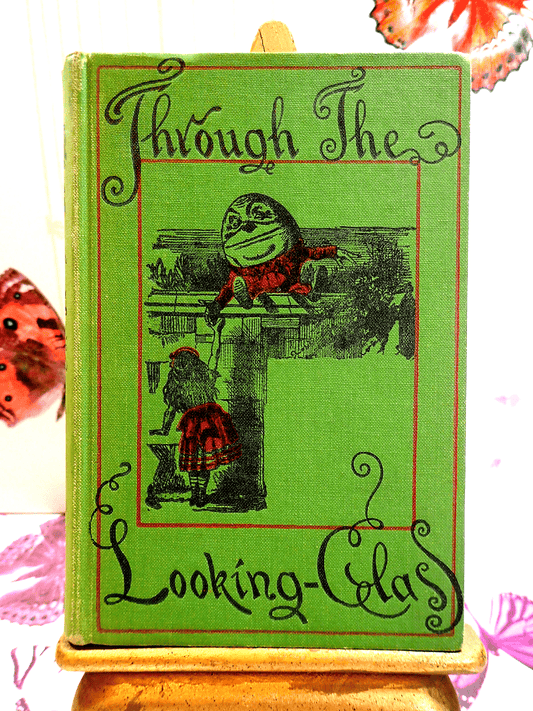
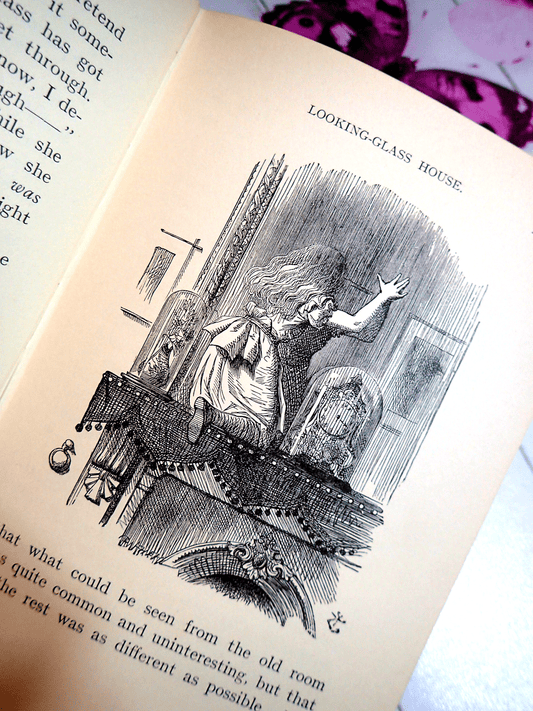
  • 1871 — Through the Looking-Glass, and What Alice Found There: The iconic sequel exploring a world based on chess.
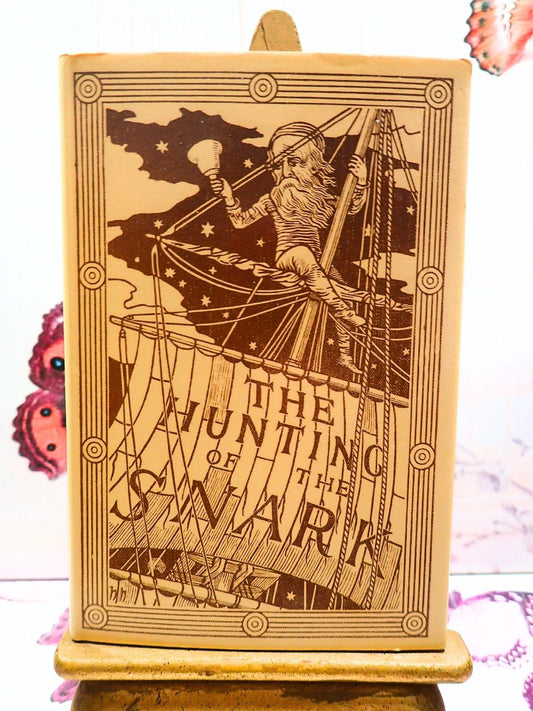
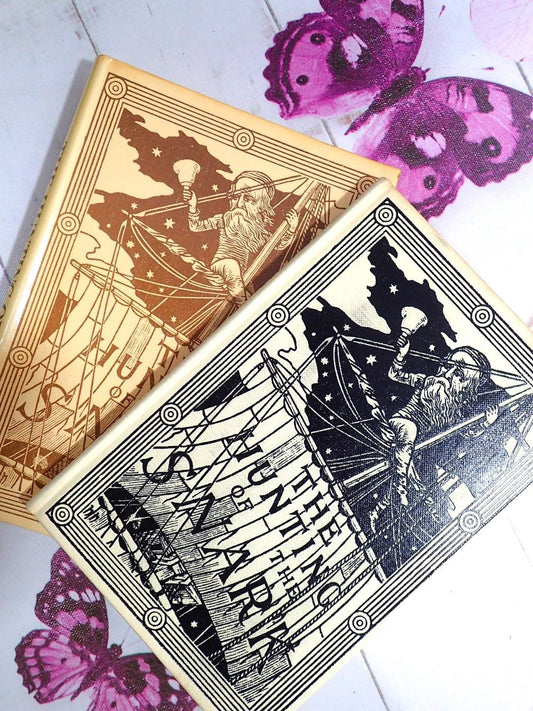
  • 1876 — The Hunting of the Snark: A quintessential "nonsense" poem depicting an impossible voyage.
  • 1876 — An Easter Greeting to Every Child Who Loves "Alice": A rare and poignant pastoral pamphlet.
  • 1886 — Alice's Adventures Under Ground: A facsimile of the original hand-lettered manuscript given to Alice Liddell.
  • 1889 — The Nursery Alice: A pioneering adaptation for "children aged 0 to 5" featuring enlarged, coloured illustrations.
  • 1889 — Sylvie and Bruno: A complex fairy tale intertwining two worlds.
  • 1893 — Sylvie and Bruno Concluded: The final installment of his ambitious fairy-tale epic.
  • 1898 — Three Sunsets and Other Poems: A posthumous collection of his more serious and reflective verse.

✥ The Bridge Between Worlds

Where Logic Meets Play

  • 1886 — The Game of Logic: A unique work issued with a board and counters, designed to teach children the rigours of syllogisms through play.

The Mathematical Works of Charles Dodgson

Scholarly Contributions & Logic

  • 1860 — A Syllabus of Plane Algebraical Geometry
  • 1860 — Notes on the First Two Books of Euclid
  • 1861 — The Formulae of Plane Trigonometry
  • 1866 — Condensation of Determinants
  • 1867 — An Elementary Treatise on Determinants
  • 1874 — Examples in Arithmetic
  • 1879 — Euclid and His Modern Rivals: A scholarly defense of Euclidean geometry, written (characteristically) as a dramatic dialogue.
  • 1888 — Curiosa Mathematica, Part I: A New Theory of Parallels
  • 1893 — Curiosa Mathematica, Part II: Pillow Problems: A fascinating collection of 72 mathematical puzzles solved by Dodgson in his head during his frequent bouts of insomnia.

Book Highlights

Chosen with care from our
Lewis Carroll collection