Her Life
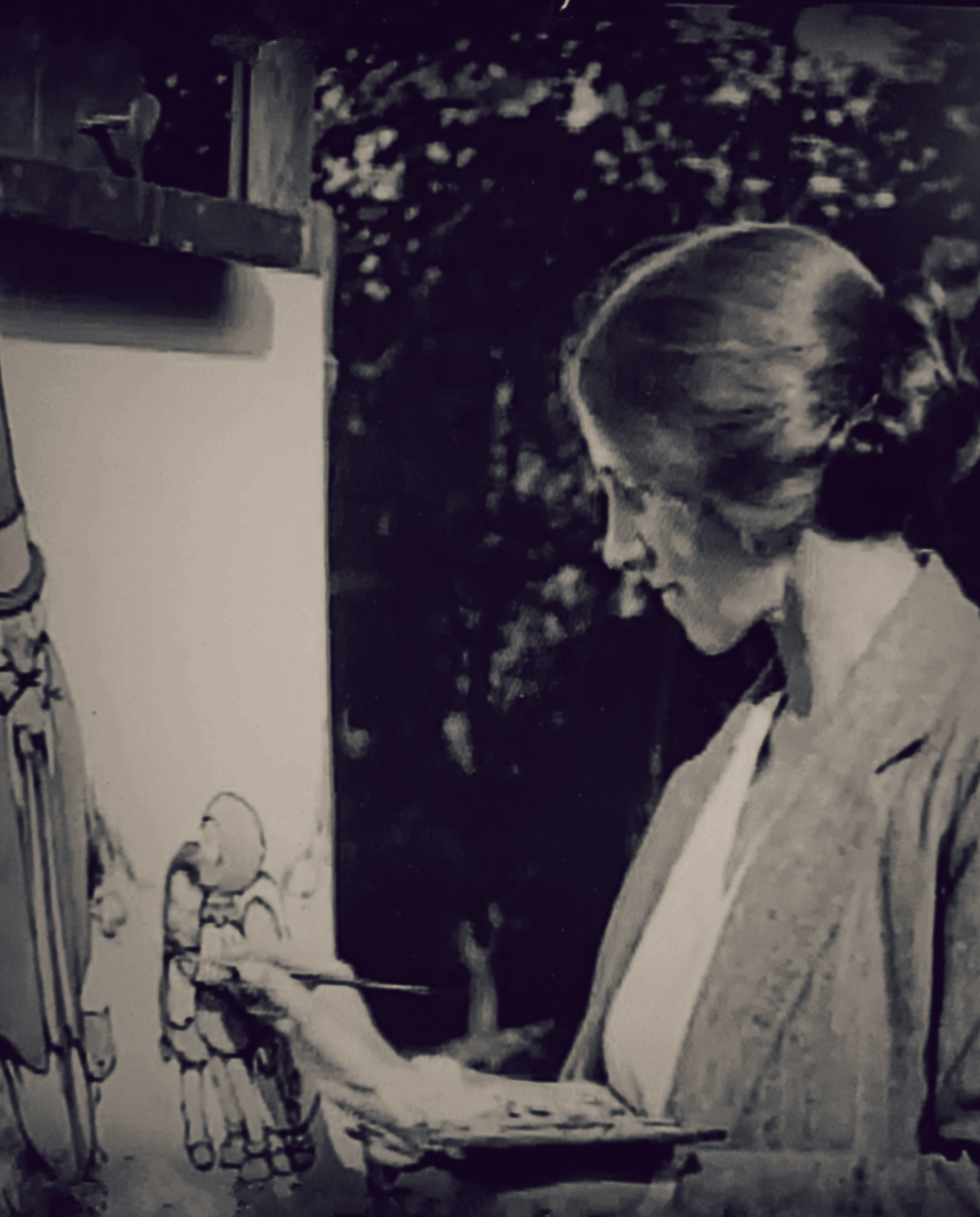
Mabel Lucie Attwell was born in London in 1879. From an early age Mabel had shown a tenacious artistic talent as well as a vibrant imagination. She found copying in the studio tedious and much preferred to illustrate her own fantasies and was especially fond of drawing young fairy like and angelic children. She managed to sell some of her early drawings which enabled her to independently continue her artistic education she studied at Heatherley's and St. Martin's School of Art.
In her early years she lived in a suburb called Mile End. Her parents were Augustus Attwell and her mother Emily Ann Attwell. She had a good upbringing and attended private schools.
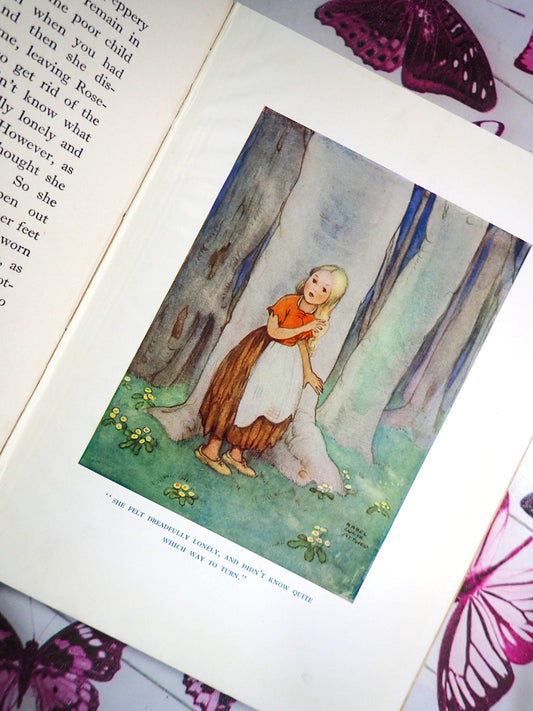
Much like Beatrix Potter she had to break free from the constraints of the age and a strict family life. It was at St Martins that she first met a man destined to become her husband.By 1905 she had found moderate success illustrating children's books by popular children's authors of the era including Mrs Molesworth, May Baldwin and Mabel Quiller Couch.
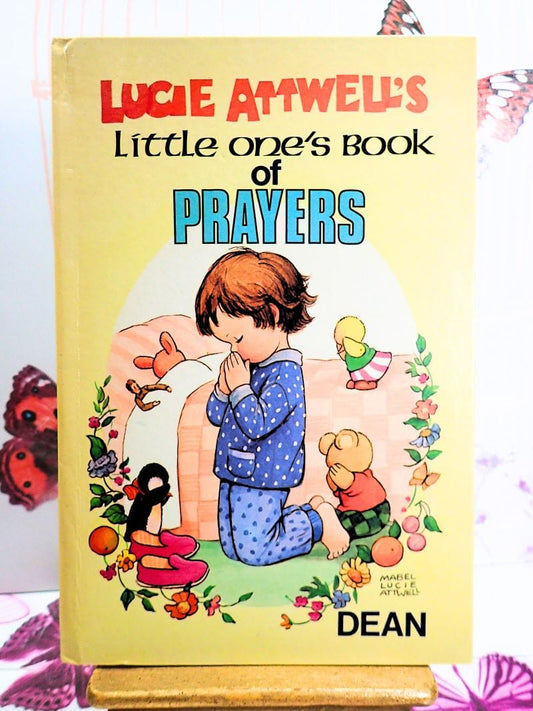
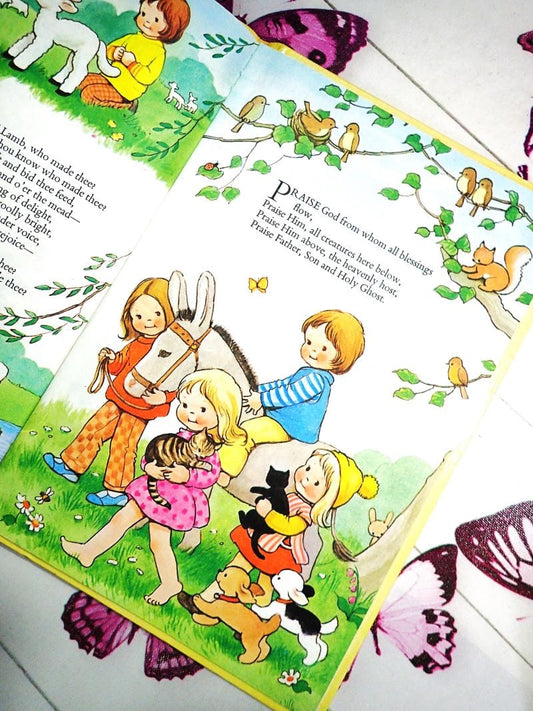
In 1908 her personal life saw her marry the kindred spirit she had met at St. Martins, the artist Harold Earnshaw. With Harold she soon had her first daughter Marjorie aka 'Peggy'. It was this beloved daughter Peggy who became the child model instrumental in creating the iconic illustrative style that we now recognise as that of Mabel Lucie Attwell. Cherubic-faced, cute and chubby children with cheeky but angelic smiles and a certain wry humour in their sweet faces. Her daughter Peggy (Marjorie) Wickham née Earnshaw, followed in her mother's footsteps and became an artist and continued marketing many of Mabel's illustrations.
When Queen Elizabeth II was a child, even herself and her sister Princess Margaret had Mabel Lucie Attwell china in their nursery, as did the Queen's own son, now King Charles III. Whether this tradition has continued you would have to ask the Royal family! After a highly successful career spending her life working on the art she loved so much she spent her final years in Fowey, Cornwall.
Mabel Lucie Attwell died at the age of 85 on the 5th November 1964 but her delightful pixies, elves, fairies and cherubic children live on in the all time classic children's books she illustrated, delighting generation after generation of children. And anyone lucky enough to have early examples of Lucie Attwell's children's, books will be sure to treasure them and perhaps pass them on to their next generation to enjoy Mabel Lucie Attwell's whimsical and timelessly appealing art.
Her Work
Some of the most notable books Mabel illustrated were important commissions such as Grimm's Fairy Tales 1910 for the publisher Cassell. In her early commissions she usually provided several colour plates for the books she illustrated as well as black and white line drawings.
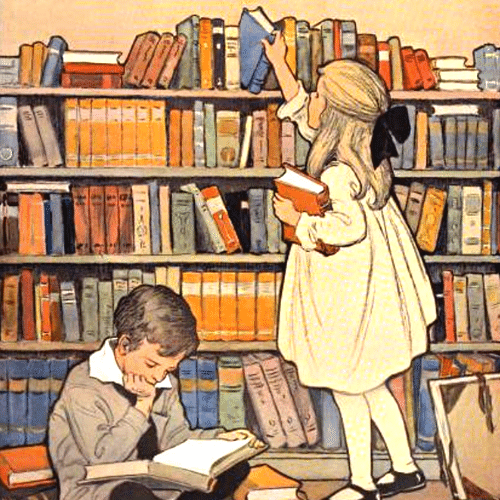
Mabel also did major work with Raphael Tuck including Alice in Wonderland 1910, Hans Andersen's Fairy Tales 1914 and the children's classic by Charles Kingsley - The Water Babies 1915. At this time she was working for publishers such as W & R Chambers and the Raphael House Library of Gift Books. Mabel's earliest output was heavily influenced by popular illustrators of the era, an era that is now recognised as the Golden Era of Illustration. These artists, many of which were in her own circle of friends included such famous illustrators as Jessie Willcox Smith, Heath Robinson, Hilda Cowham and John Hassall.
As time progressed her artistic confidence grew and her style subtly changed. Her work was bought by Magazine's and Periodicals of the day such as Tatler and Bystander. She even did early advertisement work even up until the 1970's era you could find advertisements featuring children drawn by Mabel in magazines such as Woman's Weekly.
Notably, the publisher Hodder and Stoughton commissioned Mabel to illustrate two important gift books. One of these 'Peeping Pansy' 1918 was by the Queen of Roumania resulting in Mabel being invited to stay at the Royal Palace in Bucharest to meet Queen Marie.
Another one of her most popular books was illustrated around this time 'Peter Pan and Wendy' 1921. Shortly after this she began her own gift book Annual aimed at the Christmas market. Launched in 1922 The Lucie Attwell Annual went on to be published for around half a century. Unlike many illustrators before her, the popularity of her work meant she was able to break into markets other than book illustration. The only other artist (and author) to have quite so successfully marketed her work in this way was Beatrix Potter.
Mabel felt it was important that her art gave solace to people especially children, and especially through the difficult war years. Her illustrations and their accompanying cheery messages were full of hope and smiles despite the occasional tears. The public identified with them, and it is now broadly recognised that Mabel Lucie Attwell's cheery little postcards with their sweet homilies played a role in keeping up morale, especially during World War II as many postcards were sent to lonely soldiers on the front missing their sweethearts.
Mabel Lucie Attwell's art even resulted in toys such as dolls and one of her most important partnerships was that of her commercial relationship with Shelley Porcelain, the potteries created a whole range of wares. This commercial relationship saw the 'Boo Boos' becoming a popular range of pottery ideal for nursery ware they soon caught on with the public. This relationship with Shelley Pottery continued into the 1960's. A proliferation of pottery, toys, moneyboxes, and countless postcards continued to be produced well into the 20th century.