Vintage C.S. Lewis Books

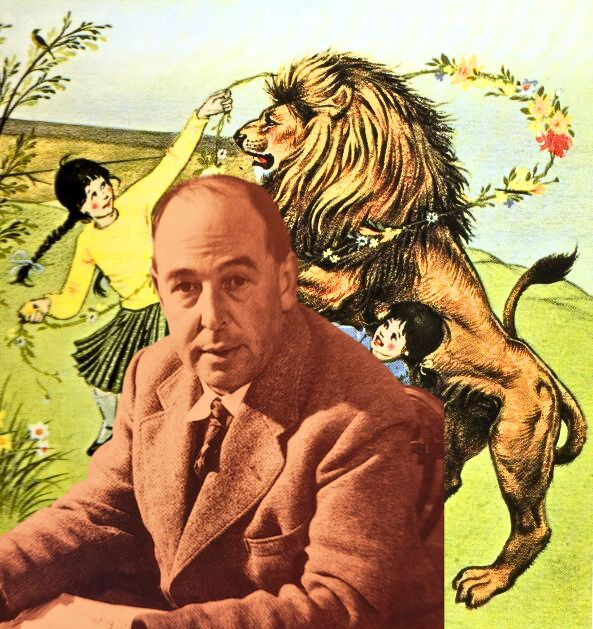
C. S. Lewis

Author

Collector's Guide

Clive Staples Lewis (1898–1963) remains one of the most influential literary figures of the 20th century. While world-renowned as a distinguished Oxford scholar and a member of the Inklings alongside J.R.R. Tolkien, it is his transformative contribution to children’s fantasy—The Chronicles of Narnia—that has secured his place in the hearts of readers across the globe. From the first steps through the wardrobe in The Lion, the Witch, and the Wardrobe to the epic science fiction of the Space Trilogy, Lewis’s writing is veined with intellectual curiosity and a profound sense of wonder. Today, vintage C.S. Lewis first editions and early copies of the Narnia series are among the most highly sought-after treasures for children’s book collectors, cherished for their enduring power to ignite the imagination of young and old alike.
🪶 In their own words
"I am a product of long corridors, empty sunlit rooms, upstair indoor silences, attics explored in solitude, distant noises of gurgling cisterns and pipes, and the noise of wind under the tiles. Also of endless books."

"You can never get a cup of tea large enough or a book long enough to suit me."

Clive Staples Lewis
— C. S. Lewis
Kittys Tales Icon

Curated for you

C. S. Lewis Featured

Research & Curation Notes

C.S. Lewis, best known for his children's books 'The Chronicles of Narnia', was a renowned British writer and scholar, he led a remarkable life filled with intellectual pursuits and creative contributions. Clive Staples Lewis, commonly known as C.S. Lewis was born on November 29, 1898, in Belfast, Ireland.

Lewis's early life was marked by personal tragedy when his mother passed away when he was just nine years old. He and his brothers were brought up by his father, a solicitor. It is not difficult to imagine that after the loss of his mother much of his childhood must have felt lonely, perhaps this loneliness fuelled his early imaginings resulting in his creation of an imaginary country called 'Bloxen'.

Throughout his childhood he had an all-consuming love for books.


He found solace in literature and spent hours engrossed in imaginative tales and classic mythologies. He loved the writings of authors such as E. Nesbit, especially 'The Story of the Amulet' (1906) eagerly absorbing the magical and fantastical aspects of the story.

He also loved the Norse Myths and was inspired further by Homer's 'Iliad', 'The Odyssey' and author George Macdonald's 'Phantastes' (1858). This passion for books and epic storytelling would later shape his own writing in later life he stated 'I wrote the books that I should have liked to read'.

As a young man, Lewis fought in World War I, an experience that deeply affected him. Following the war, he pursued his education at Oxford University, where he excelled in literature and philosophy becoming a distinguished scholar. He became a fellow and tutor at Magdalen College, Oxford, and later held the position of Chair of Medieval and Renaissance English at Cambridge University in 1954.

During his academic career, Lewis developed a close friendship with J.R.R. Tolkien. Meeting the author of 'The Lord of the Rings' was a pivotal moment. Along with a group of like-minded friends they formed a lively group known as The Inklings, meeting at a local pub to discuss writing and all things literary.

These meetings with such great minds served as a fertile ground for intellectual exchange, spurring each other on to write, and fuelling Lewis's creative endeavors. Under Tolkien's influence he began to write the 'Chronicles of Narnia' (1950-6).

Lewis always said the seeds of his writing came from his childhood claiming:

"I am a product of long corridors, empty sunlit rooms, upstair indoor silences, attics explored in solitude, distant noises of gurgling cisterns and pipes, and the noise of wind under the tiles. Also of endless books."

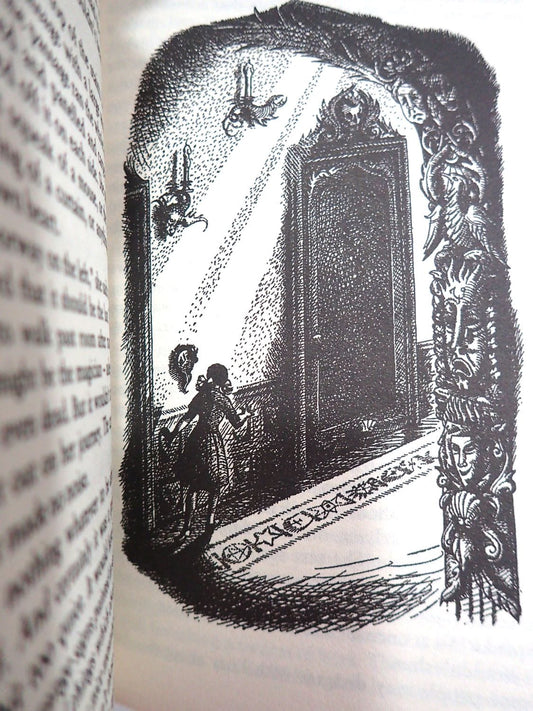
The bare bones of 'The Magician's Nephew', beginning with the wanderings in the attic can easily be seen within this quote. As for books apparently all the bookshelves in his house were at least two books deep so they really were endless!

A gifted writer, academic, and Christian thinker, he lived a life filled with passion, intellectual curiosity, and creative exploration. Not only as a children's author but his contributions to literature and theology have left a deep impression making him one of the most beloved and influential literary figures of the 20th century and beyond.

C.S. Lewis's writing career took off with the publication of 'The Pilgrim's Regress' in 1933, followed by the science fiction trilogy 'Out of the Silent Planet,' 'Perelandra,' and 'That Hideous Strength.'

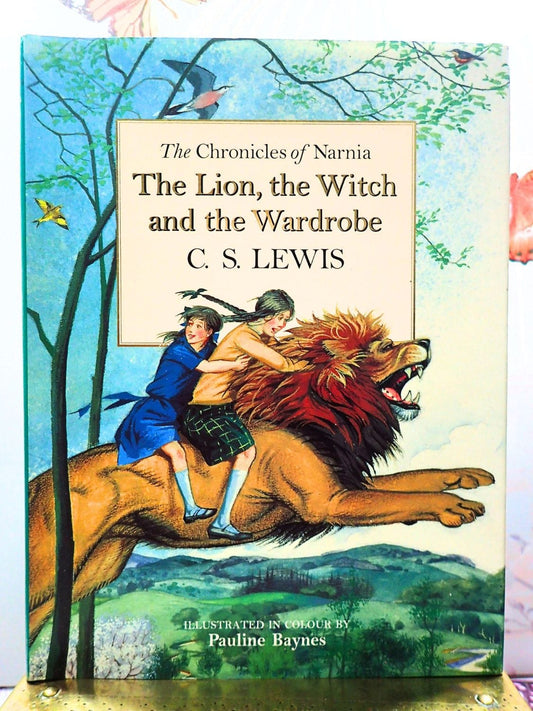
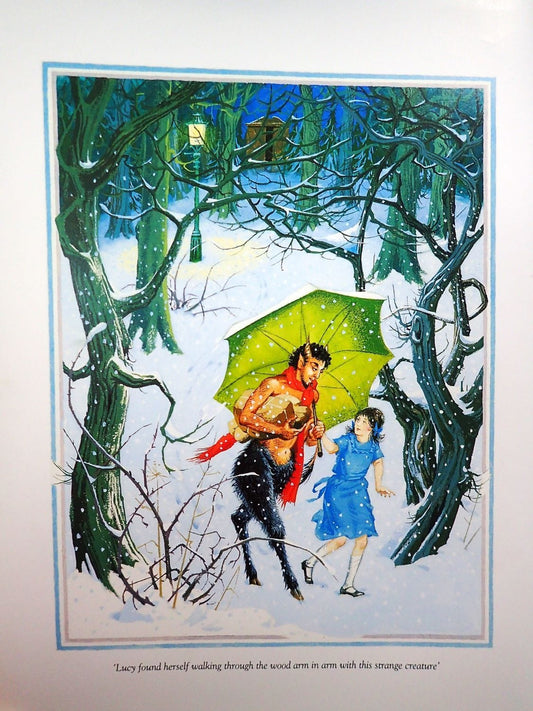
It was his children's fantasy series, 'The Chronicles of Narnia,' with the endearing characters of the Peverel children with Aslan, The White Witch, Tumnus the Faun and all the other wonderful characters that catapulted him to literary stardom.

Inspired by the "endless books" and attic solitudes of his youth, Lewis blended ancient myth, Aesop’s fables, and deep spiritual allegory to create a world that transcends the boundaries of age.

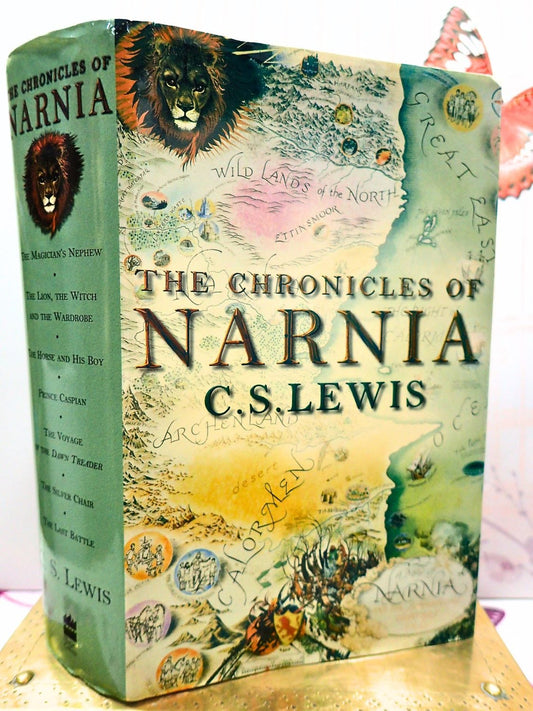
This beloved series, the entire 'Chronicles' consisting of seven books, including 'The Lion, the Witch, and the Wardrobe,' enchanted readers of all ages with its allegorical themes and captivating storytelling richly melded with the mythology that Lewis loved.

Having at one point in his life embraced Atheism, under the wing of Tolkien Lewis regained his Christianity. Beyond his fiction, Lewis is renowned for his works on Christian apologetics, writing eloquently to defend the rationality of the Christian faith. His book 'Mere Christianity' along with the slightly tongue in cheek 'The Screwtape Letters', have become classics in the genre and continuing to resonate with readers seeking to understand and articulate their faith.

Lewis's engaging writing style, combined with his profound insights into theology and philosophy, attracted a wide audience. His ability to communicate complex ideas in a relatable manner contributed to his enduring popularity.

Despite his literary success, Lewis experienced personal hardships, including the loss of his wife, Joy Davidman, to cancer. Her influence on his life is evident in his poignant work, 'A Grief Observed,' where he grapples with the profound pain of her death. The book was later adapted as a moving film starring the great Anthony Hopkins playing the role of C. S. Lewis.

C.S. Lewis's remains one of our greatest loved children's authors. 'The Chronicles of Narnia' have been read and enjoyed by generations of children and their appeal never ceases.

Early and first editions of these classic children's books are some of the most highly sought after children's books to collect. His thought-provoking ideas and imaginative storytelling continue to inspire and captivate readers, young and old.

Even as an adult it is possible to return to these wonderful books and gain some deep sense of spirituality and wonder from them. His books have sold millions of copies worldwide and have been translated into multiple languages.

There has been much criticism of the allegorical tone of Lewis's Chronicles of Narnia, suggesting they proselytize Christianity and are propaganda. This is a simple assumption to make with only a very shallow reading of the books. For example, the so called crucifixion allegory wherein Aslan the lion is freed from his ropes by a mouse, is not purely some fevered idea of Lewis's to mimic a crucifixion scene but instead is drawn directly from a fable by Aesop written thousands of years ago of The Lion and the Mouse, this fable in itself is also believed to date back further to the Egyptian Dynasties. To assume that the books are simply some facile derivation of Christianity is actually quite puerile.

Above all, Lewis wanted to entertain children with fiction and that is what he achieved, that his stories are veined with the blood of ancient myth, fable and religious allegory makes them no less enjoyable for children.

From the Researcher's Desk

For the Researcher:

Carpenter, H. (1978) The Inklings. London: Allen & Unwin.

A foundational study of Lewis’s literary circle (Tolkien, Williams, Barfield). Essential for understanding his collaborative and intellectual environment.

Como, J.T. (ed.) (1979) C.S. Lewis at the Breakfast Table. London: Collins.

A collection of reminiscences from those who knew Lewis personally; valuable for anecdotal and character-based research.

Downing, D.C. (2002) The Most Reluctant Convert. InterVarsity Press.

Focuses on Lewis’s conversion and intellectual journey to Christianity—key for theological or philosophical angles.

Dorsett, L.W. (2004) Seeking the Secret Place: The Spiritual Formation of C.S. Lewis. Brazos Press.

A study of Lewis’s spiritual development, useful for research on religious identity or apologetics.

Dorsett, L.W. and Mead, M.L. (eds.) (1995) Letters to Children. London: Collins.

Reveals Lewis’s personality, pastoral instincts, and attitudes toward writing and imagination.

Duriez, C. (2003) Tolkien and C.S. Lewis: The Gift of Friendship. Hidden Spring.

Explores the friendship that shaped both writers’ creative and spiritual lives. Useful for comparative or influence-based research.

Gibb, J. (ed.) (1965) Light on C.S. Lewis. London: Geoffrey Bles.

A classic set of personal recollections, often cited in biographical scholarship.

Gresham, D. (2005) Jack’s Life: The Life Story of C.S. Lewis. Broadman & Holman.

Written by Lewis’s stepson; humanizing and personal, though less academic. Helpful for understanding domestic and relational aspects.

Hooper, W. (1996) C.S. Lewis: A Companion and Guide. London: HarperCollins.

Universally regarded as the definitive reference book on Lewis. At 940 pages, it provides a comprehensive overview of his life, works, themes, and chronology.

Hooper, W. (ed.) (2004–2005) Collected Letters of C.S. Lewis (3 vols.). London: HarperCollins.

The definitive edition of Lewis’s correspondence, essential for primary-source research into his personal life and friendships.

Jacobs, A. (2005) The Narnian: The Life and Imagination of C.S. Lewis. London: HarperCollins.

A literary-intellectual biography focusing on how Lewis’s imaginative life shaped his writing.

Kilby, C.S. and Gilbert, D. (2005) C.S. Lewis: Images of His World. Eerdmans.

A pictorial biography with rare photographs of Lewis’s family and Oxford life; useful for contextual and visual analysis.

Lewis, C.S. (1955) Surprised by Joy. London: Geoffrey Bles.

Lewis’s own account of his early life, education, and conversion. A key primary source for understanding his intellectual formation.

Martin, T. (ed.) (2000) Reading the Classics with C.S. Lewis. Baker Academic.

A collection of essays examining Lewis’s literary influences—useful for studies on intertextuality.

Reference.com (2026) C.S. Lewis: Author Profile, Works, and Scholarly Considerations.

A modern scholarly overview summarizing Lewis’s academic standing and major themes.

Sayer, G. (1994) Jack: A Life of C.S. Lewis. Hodder & Stoughton.

Often considered the best overall biography. Sayer was Lewis’s student and friend, providing unique access to personal recollections.

Select Bibliography

C.S. Lewis produced an extensive body of work across various genres:


Fiction:

● "The Pilgrim's Regress" (1933)
● "Out of the Silent Planet" (1938)
● "Perelandra" ("Voyage to Venus")(1943)
● "That Hideous Strength" (1945)
● "The Chronicles of Narnia" (a series of seven books):
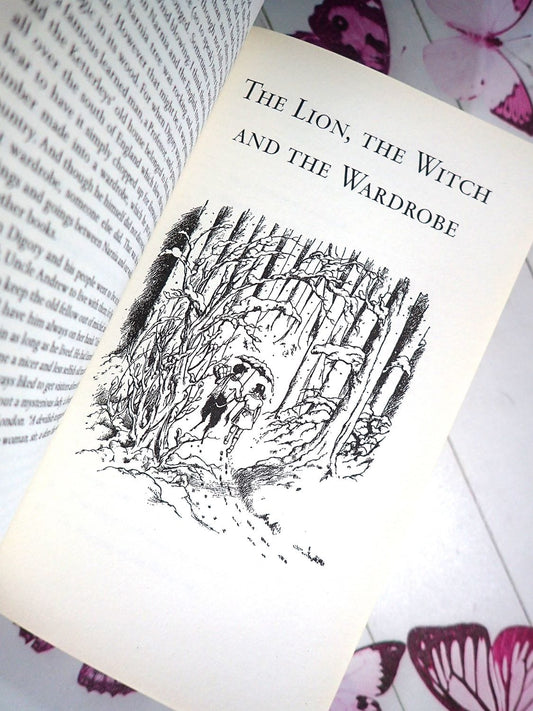
○ "The Lion, the Witch and the Wardrobe" (1950)
○ "Prince Caspian" (1951)
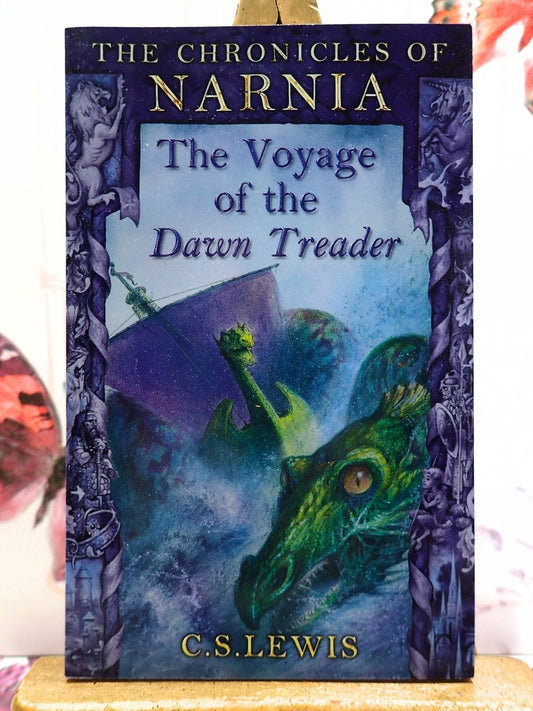
○ "The Voyage of the Dawn Treader" (1952)
○ "The Silver Chair" (1953)
○ "The Horse and His Boy" (1954)
○ "The Magician's Nephew" (1955)
○ "The Last Battle" (1956)
Non-fiction and Christian Apologetics:
● "The Problem of Pain" (1940)
● "The Abolition of Man" (1943)
● "Miracles: A Preliminary Study" (1947)
● "Mere Christianity" (1952)
● "Surprised by Joy: The Shape of My Early Life" (1955)
● "Reflections on the Psalms" (1958)
● "The Four Loves" (1960)
● "The World's Last Night and Other Essays" (1960)
● "A Grief Observed" (1961)
● "The Discarded Image: An Introduction to Medieval and Renaissance Literature" (1964)
Essays and Collections:
● "Rehabilitations and other Essays" (1939)
● "The Weight of Glory and other Addresses" (1949)
● "Fern-seed and Elephants and other Essays on Christianity" (1975)
● "God in the Dock: Essays on Theology and Ethics" (1970)
● "Undeceptions: Essays on Theology and Ethics" (1971)
● "Of Other Worlds: Essays and Stories" (1982)
● "Present Concerns" (1986)
Poetry:
● "Spirits in Bondage: A Cycle of Lyrics" (1919)
● "Dymer" (1926)
● "Narrative Poems" (1969)
Letters:
● "The Collected Letters of C.S. Lewis" (three volumes)

Book Highlights

Chosen with care from our
C. S. Lewis collection